Regular oil changes are one of the simplest ways to help keep your vehicle running smoothly. Engine oil lubricates moving parts, helps manage heat, and helps protect the engine from wear.
But how often should you actually change your oil?
The answer depends on several factors, including your vehicle, the type of oil it uses, your driving habits, and the conditions you drive in.
For many modern vehicles, oil-change intervals can be longer than they were years ago. However, following your vehicle manufacturer’s recommended maintenance schedule is still the best place to start.
Whether you’re commuting around Rosenberg, making short trips around town, or putting a lot of miles on your vehicle, staying on top of routine oil changes can help you avoid unnecessary engine problems.
How Often Should You Change Your Oil?
A common recommendation you’ll hear is every 3,000 miles, but that interval does not apply to every modern vehicle.
Many newer vehicles can go significantly longer between oil changes, especially when using the oil specified by the manufacturer.
Your owner’s manual should provide the recommended interval for your specific vehicle.
Factors that can affect how frequently you should change your oil include:
- Vehicle age and mileage
- Engine type
- Type of motor oil used
- Driving frequency
- Stop-and-go traffic
- Short-distance driving
- Heavy loads or towing
- Extreme temperatures
- Frequent idling
If you’re unsure about your vehicle’s recommended oil-change interval, checking the owner’s manual or speaking with a qualified automotive service professional can help.
Why Is Engine Oil So Important?
Your engine contains many moving components that operate under high temperatures and pressure.
Engine oil creates a lubricating layer between these components, helping reduce friction and wear.
Oil also helps:
- Lubricate engine components
- Reduce friction between moving parts
- Help control engine heat
- Carry contaminants toward the oil filter
- Protect internal engine components
- Support overall engine performance
As oil ages, it can become contaminated and lose some of its effectiveness. That’s why regular oil and filter changes are an important part of routine vehicle maintenance.
5 Signs Your Vehicle May Need an Oil Change
Your vehicle doesn’t always give you an obvious warning when it’s time for an oil change, but there are some signs worth paying attention to.
1. You’re Due According to Your Maintenance Schedule
The simplest sign is that you’ve reached the mileage or time interval recommended for your vehicle.
Keeping track of your previous oil change can make it easier to know when your next service is due.
2. Your Oil Looks Dirty
Fresh engine oil is generally cleaner and lighter in appearance. As it circulates through the engine, it collects contaminants and becomes darker.
Dark oil doesn’t automatically mean there’s a problem, but checking your oil regularly can help you stay aware of its condition.
3. Your Engine Sounds Different
Oil helps lubricate moving engine components. If you notice unusual engine noises, knocking, ticking, or other changes, don’t ignore them.
An unusual sound can have many possible causes, so it’s worth having the vehicle inspected rather than assuming an oil change alone will solve the problem.
4. Your Oil Level Is Low
A low oil level can indicate that your engine is consuming or leaking oil.
Checking the oil level periodically is a simple maintenance habit, especially before longer trips.
If you repeatedly need to add oil between changes, have the vehicle checked by a qualified professional.
5. Your Oil Warning Light Comes On
If your vehicle’s oil-pressure warning light comes on, don’t treat it as a routine maintenance reminder.
An illuminated oil-pressure warning light can indicate a serious issue. Follow your vehicle manufacturer’s instructions and have the vehicle checked as soon as possible.
Does Your Driving Style Affect Oil-Change Frequency?
Yes.
Two vehicles of the same model may not necessarily have identical maintenance needs because driving conditions can be very different.
Frequent short trips, heavy traffic, extended idling, towing, and other demanding driving conditions can place additional stress on a vehicle.
If most of your driving involves short trips around town or frequent stop-and-go traffic, it’s especially important to follow the maintenance schedule recommended for your vehicle.
Conventional vs. Synthetic Oil
Motor oil comes in different formulations, and your vehicle manufacturer specifies which type is appropriate for your engine.
Conventional oil is a traditional type of motor oil.
Synthetic oil is engineered to provide specific performance characteristics and is commonly recommended for many modern vehicles.
Synthetic oil can offer advantages in certain applications, but that doesn’t mean it’s automatically the right choice for every vehicle.
The most important thing is to use the oil type and viscosity specified by your vehicle manufacturer.
Don’t Forget the Oil Filter
An oil change isn’t just about replacing the oil.
The oil filter helps remove contaminants from the engine oil as it circulates through the engine.
That’s why replacing the oil filter as part of regular oil-change service is an important part of routine maintenance.
A fresh filter and the correct oil help support the lubrication system and overall engine maintenance.
What Happens During an Oil Change?
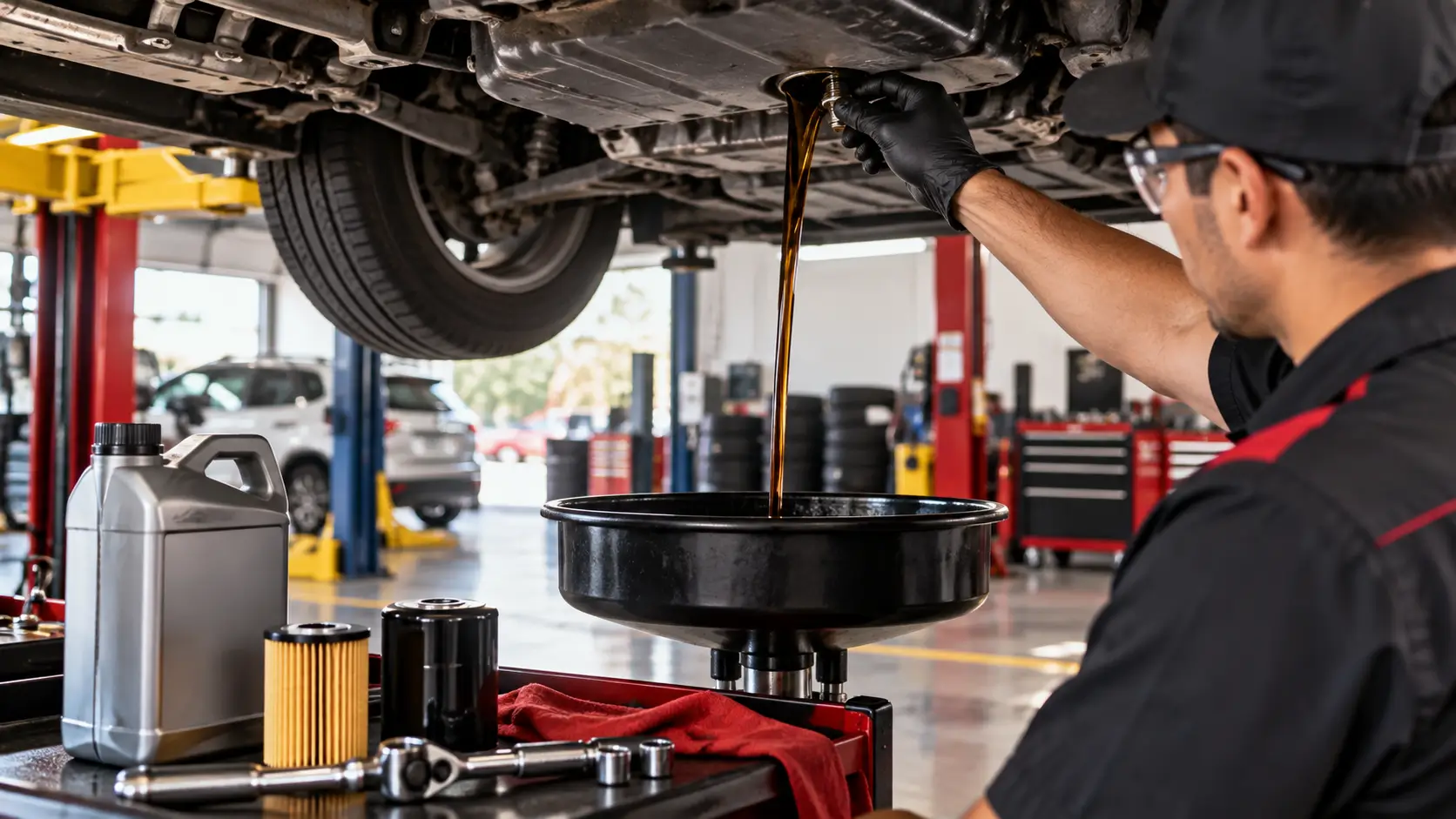
A typical professional oil-change service may include:
- Draining the old engine oil
- Replacing the oil filter
- Installing the correct amount and type of new oil
- Checking the oil level
- Inspecting for visible leaks or other obvious issues
- Checking other basic vehicle maintenance items when included in the service
The exact process can vary depending on the vehicle and service provider.
How to Stay on Top of Your Oil Changes
Keeping up with oil changes doesn’t have to be difficult.
A few simple habits can help:
- Check your owner’s manual for the recommended interval
- Keep track of your mileage after each oil change
- Use the oil specified for your vehicle
- Check your oil level periodically
- Pay attention to dashboard warning lights
- Don’t ignore unusual engine noises or leaks
- Schedule service before you’re significantly overdue
A little routine maintenance can go a long way toward keeping your vehicle dependable.
Keep Your Vehicle Road Ready
Your vehicle works hard every day, and routine maintenance helps you stay ahead of problems.
At The Speedy Sticker Stop, we provide convenient professional oil change services for drivers in Rosenberg and the surrounding area. Whether you’re due for routine maintenance or simply want to stay on top of your vehicle’s needs, our team is here to help.
Need an oil change?
Keep up with your routine maintenance and keep your vehicle road-ready.